Fall 2026 appointments now open · Davis & Weber County
Fall 2026 Tree Health Program: Plant Health Care for Davis & Weber County
ISA Certified Arborists serving Layton, Kaysville, Farmington, Bountiful, Ogden & Roy
Deep root fertilization, beetle and borer prevention, and disease injections that protect your trees before Utah's winter and next spring's pests arrive. Book your free tree health assessment today.
Your Complete Fall 2026 Tree Health Program
All Wood’s Tree Service protects trees and shrubs across Layton, Kaysville, Farmington, Bountiful, Ogden, Roy, and the rest of Davis and Weber County with a complete plant health care program. Our ISA Certified Arborists combine deep root fertilization, beetle and borer prevention, and disease and pest injections to keep your landscape thriving through Utah's tough soil and climate.
- 1
Deep Root Fertilization
Nutrients, mycorrhizae, and soil conditioners injected directly into the root zone, where Utah's compacted, alkaline clay soil starves trees of what they need.
- 2
Beetle & Borer Prevention
Systemic trunk injections that make your trees lethal to bark beetles and wood borers before they ever tunnel in. Prevention is the only reliable defense.
- 3
Disease & Pest Injections
Targeted treatments for aphids, scale, iron chlorosis, and fungal and bacterial disease, applied inside the tree so they reach every leaf and limb.
What Is Deep Root Fertilization?
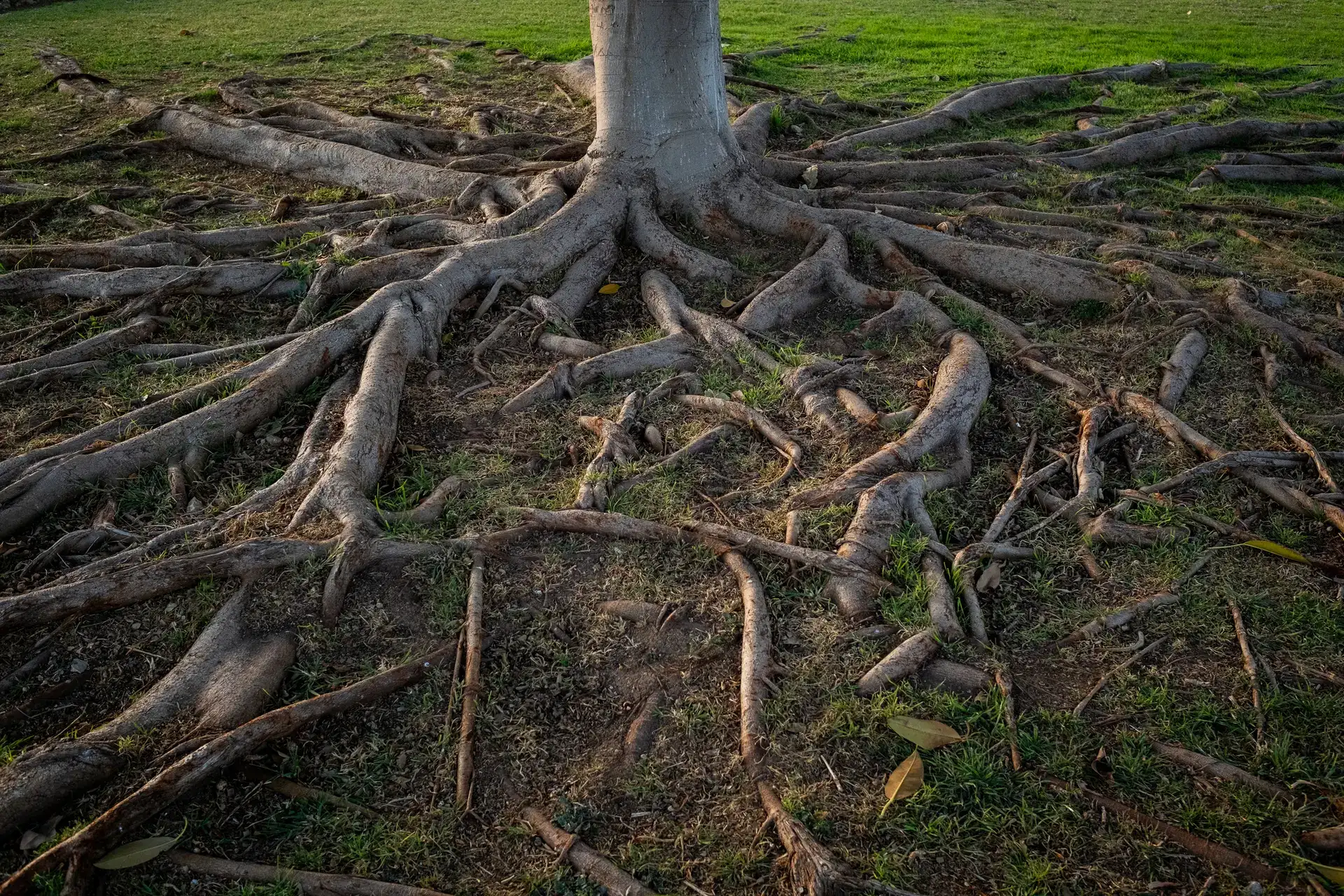
Deep root fertilization is the process of injecting a balanced, nutrient-rich solution, enriched with micronutrients, chelated iron, and mycorrhizal fungi, approximately 6 to 12 inches into the soil around a tree's root zone. That depth bypasses competition from turfgrass and reaches the feeder roots where absorption is most effective.
Most of Northern Utah sits on compacted, high-pH clay. Trees planted in it struggle to pull up iron and other nutrients no matter how much you water. Deep root fertilization fixes the problem at the source.
- Slow-release macronutrientsthat feed the tree for months, not weeks.
- Chelated iron and micronutrientsto correct the yellowing (chlorosis) common in Utah maples, oaks, and birches.
- Mycorrhizal fungithat extend the root system and improve water uptake.
- Soil conditionersthat loosen compacted clay and improve aeration.
Benefits of Deep Root Fertilization
A fall feeding does its work underground all winter, so your trees wake up in spring with the reserves to push healthy new growth.
Nutrients straight to the roots
Surface fertilizer feeds your lawn first. Injection delivers the full dose to the feeder roots, where the tree can actually use it.
Aerates compacted soil
The injection process opens channels in dense clay, letting water and oxygen reach roots that have been suffocating for years.
Stronger resistance to pests and disease
A well-fed tree produces the defensive compounds that repel beetles, borers, and fungal infections. Stressed trees are the ones that get attacked.
Faster recovery from stress
Drought, construction damage, transplant shock, and storm injury all heal faster when the tree has nutrient reserves to draw on.
Vigorous root and canopy growth
Mycorrhizal fungi in the treatment can double the effective reach of a root system, which shows up above ground as fuller, greener foliage.
Corrects iron and micronutrient deficiencies
Yellow leaves with green veins mean the tree cannot pull iron from alkaline soil. Chelated iron delivered at the roots turns them green again.
Signs Your Trees May Need Fertilization
Trees rarely fail overnight. They send signals for a season or two first. If you see any of these on your property, a free assessment will tell you whether feeding, treatment, or both is the right call.
- Yellowing or discolored leaves.Especially yellow leaves with dark green veins, the classic sign of iron chlorosis in Utah.
- Sparse foliage or stunted growth.Less than a few inches of new twig growth per year means the tree is running on empty.
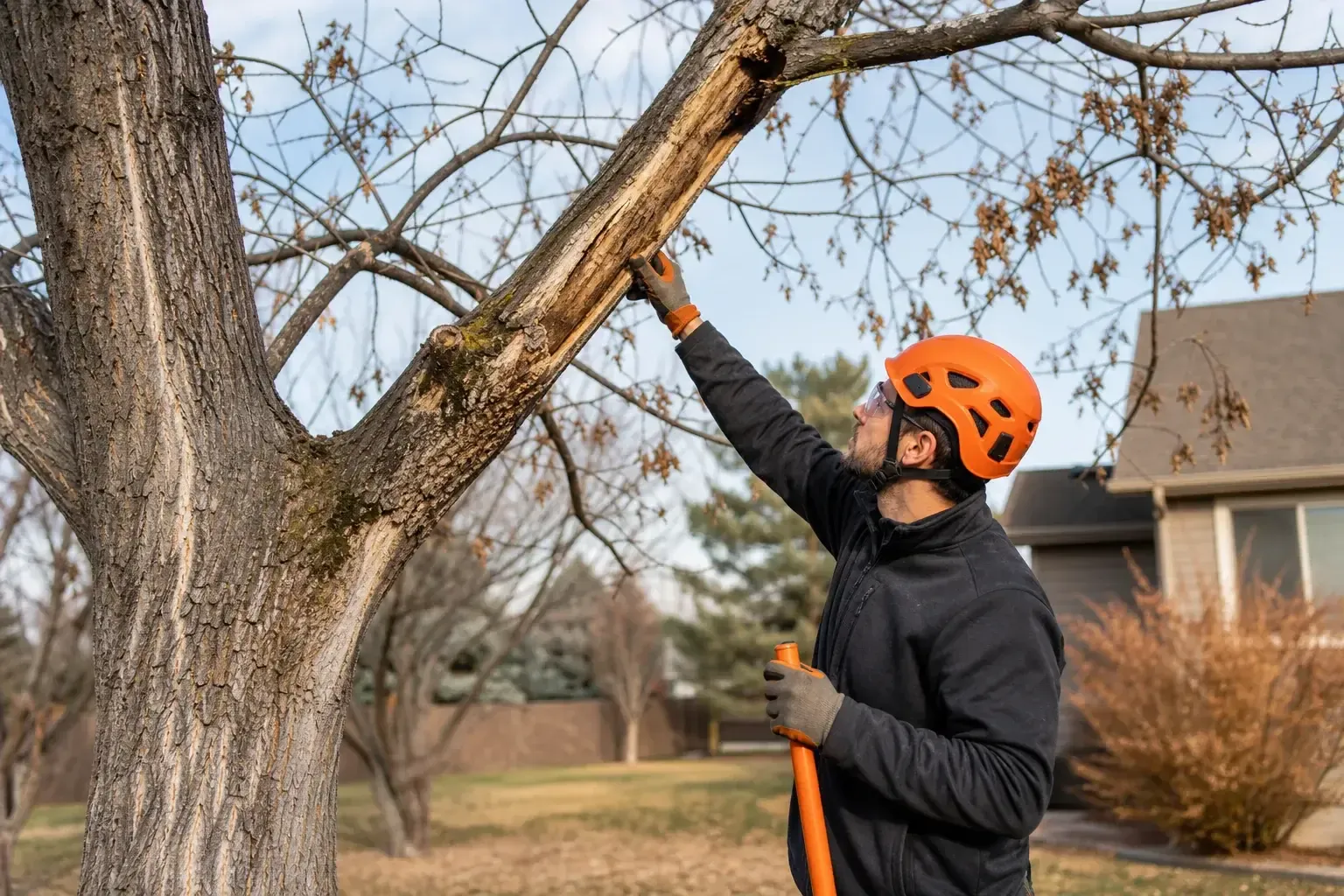
- Dead or declining branches.Dieback that starts at the tips and top of the canopy points to root or nutrient trouble.
- General signs of stress.Early fall color, premature leaf drop, or leaves that scorch in July heat.
- Pitch tubes, sawdust, or small holes in the trunk.These are borer and beetle signs, and they need attention right away. See below.
- Leaf spots, cankers, or diebackconsistent with fungal or bacterial disease.
Deep Root Fertilization Scam: What to Know
There's a common misconception that deep root fertilization is a scam. The truth is, while tree feeder roots are typically found within the top 6 to 8 inches of soil, professional deep root fertilization specifically targets this zone. The same holds true for our trunk injection treatments for disease, borers, and nutrient deficiencies: results depend on proper technique, EPA-approved products, and correct dosing by size of DBH (diameter at breast height). At All Wood’s Tree Service, our ISA Certified Arborists follow industry best practices for every application, so you can trust that each treatment truly benefits your trees. It's science-based tree care, not a gimmick.
Beetles & Borers: Utah's Most Destructive Tree Pests
Bark beetles and wood-boring insects kill more mature trees in Northern Utah than drought, disease, or storms. They work out of sight, under the bark, and by the time a homeowner notices the damage, the tree is usually beyond saving. These are the pests our arborists see most in Davis and Weber County.
- Pines & spruce
Bark Beetles
Ips engraver beetles, mountain pine beetle, and spruce beetle bore through the bark and carve galleries in the living tissue underneath, cutting off the flow of water and nutrients. A single infested tree can seed the whole neighborhood.
- Birch
Bronze Birch Borer
The reason so many Utah birches die from the top down. Larvae tunnel just under the bark, girdling the upper limbs first. Once the top third of the canopy is dead, the tree is rarely recoverable.
- Ash & lilac
Lilac / Ash Borer
A clearwing moth whose larvae bore into the trunk and lower limbs of ash and lilac, leaving sawdust-packed holes and weak, breaking branches.
- Ash
Emerald Ash Borer
The invasive beetle that has killed tens of millions of ash trees across North America and continues to spread west. Ash is one of the most common street and yard trees in Davis and Weber County, and preventive injection is the only proven protection.
- Fruit trees
Peach Tree Borer
Attacks peach, cherry, plum, and apricot at the base of the trunk. Look for gummy ooze mixed with sawdust at the soil line. Untreated, it kills young trees in a season or two.
- Elm
Elm Bark Beetles
Damaging on their own, and worse as the carrier of Dutch elm disease. Protecting the tree from the beetle is the first line of defense against the disease.
Why You Have to Inject Before the Tree Is Infested
A systemic trunk injection puts the treatment inside the tree's vascular system, so it's already waiting in the wood when the beetle bores in. That only works while the tree is healthy enough to move it. Here is what happens on each side of that line.
- 1
Healthy tree, injected
The product travels through sapwood into the trunk and limbs. Adult beetles that attempt to bore in, and larvae that hatch under the bark, are killed before they can build galleries. One treatment protects for a full season or longer, depending on the product.
- 2
Early attack, caught in time
If our arborist finds fresh pitch tubes or a few entry holes on an otherwise vigorous tree, an injection can still stop the infestation from spreading through the trunk. This is the last window where treatment saves the tree.
- 3
Established infestation
Once larvae have girdled the cambium, the tree can no longer transport the treatment, and the damage that kills it is already done. A browning crown means the tree has usually been infested for a year or more. At this stage the safe option is removal before the tree becomes a hazard or a source of beetles for its neighbors.
Prevention costs a fraction of removal. An annual injection for a mature pine or ash is a small line item. Taking down and hauling away a dead 60-foot tree is not. If you have valuable pines, spruce, birch, or ash on your property, get them on a preventive schedule now.
Protect My Trees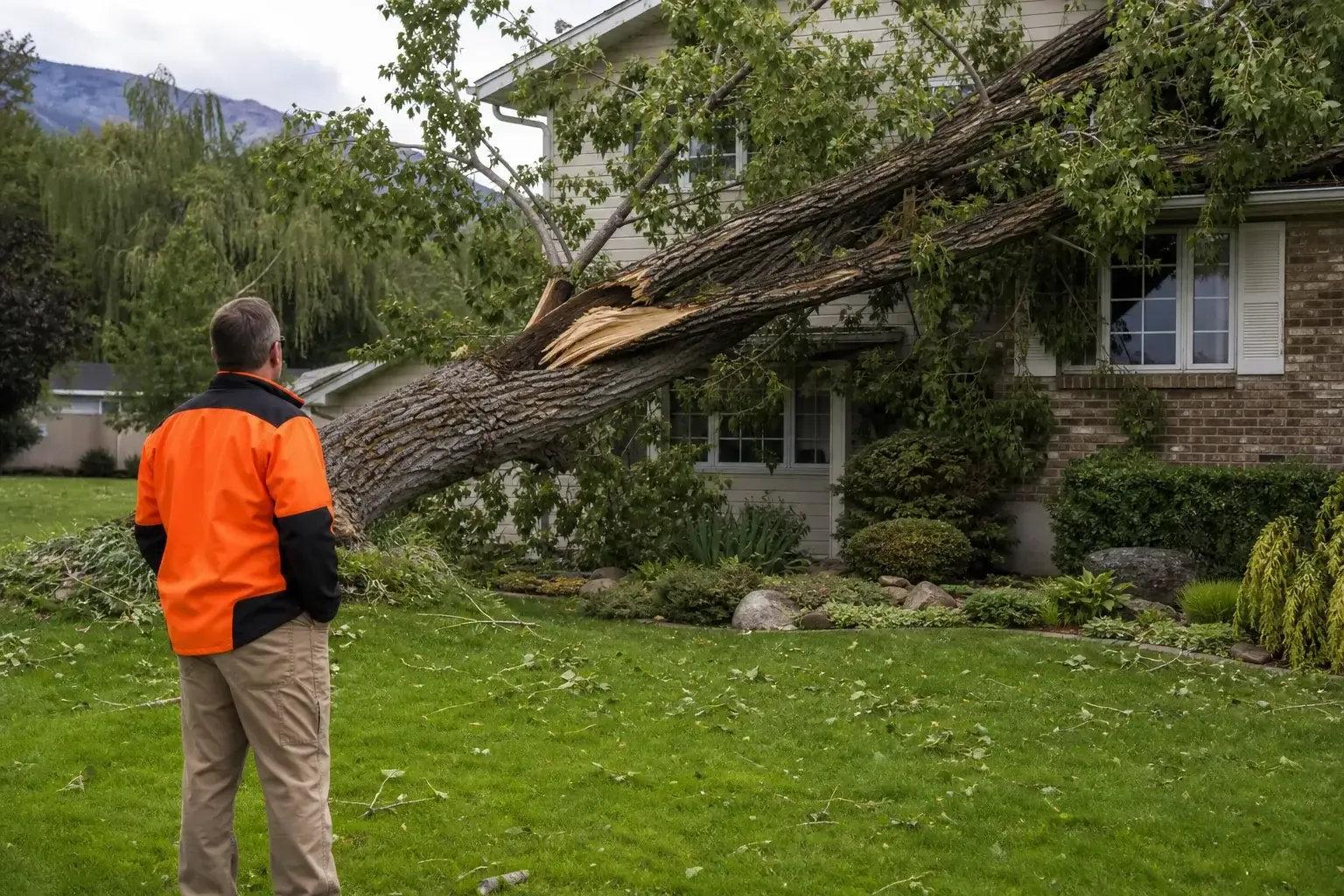
Signs of Beetle or Borer Activity
Walk around each conifer, birch, ash, and fruit tree on your property and look closely at the trunk and the base of the main limbs. Any of these means call us the same week.
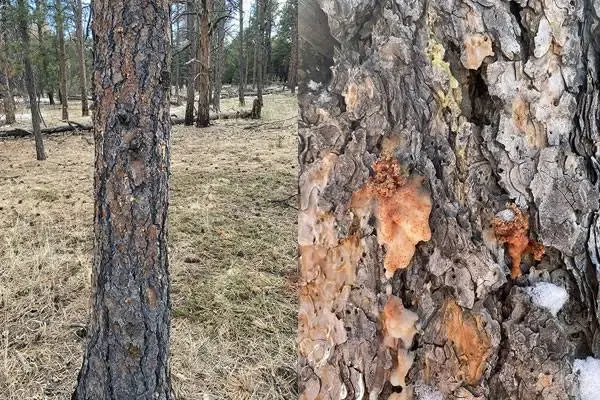
- Pitch tubes.Popcorn-sized blobs of resin on pine and spruce bark, often reddish or white. The tree is trying to push beetles out.
- Boring dust.Fine sawdust in bark crevices, at the base of the trunk, or in spider webs on the trunk.
- Exit holes.Small round holes (bark beetles) or D-shaped holes (bronze birch borer, emerald ash borer) in the bark.
- Woodpecker damage.Woodpeckers strip bark to reach larvae. Patches of missing bark high in the tree are a strong signal.
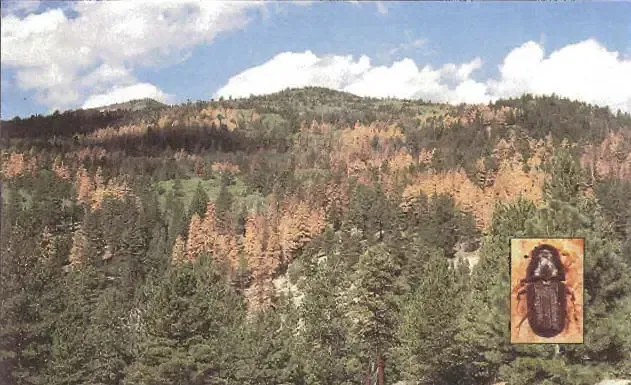
- Thinning or fading crown.Needles or leaves that fade to yellow, then red or brown, starting at the top.
- Gummy ooze at the trunk baseon fruit trees, the sign of peach tree borer.
Bark Beetle Warning Signs
Mountain pine beetles, Ips engraver beetles, and pine pitch mass borers are among the pine pests Utah homeowners should watch for. Once a tree is heavily infested, it usually cannot be saved, so recognizing the warning signs early can help protect nearby healthy trees.
Four Warning Signs to Look For
- Pitch tubes.Cream, pink, reddish, or brown popcorn-shaped masses of resin show where the tree tried to push invading beetles out.
- Frass or boring dust.Fine reddish-brown or orange sawdust may collect in bark crevices, spider webs, or around the base of the trunk.
- Woodpecker damage.Fresh areas of stripped or flaking bark can mean woodpeckers are feeding on beetle larvae beneath the surface.
- Needle fade.Needles may change from green to yellow and then rust red or brown. By the time most of the crown is red, the tree is usually too damaged to recover.
- Usually stressed pines
Ips Engraver Beetles
Ips beetles often begin in the upper canopy. Beneath loose bark, they leave recognizable Y-, H-, or I-shaped galleries.
- Can attack mature pines
Mountain Pine Beetles
These beetles may introduce blue-stain fungi that interfere with water movement and leave gray-blue streaking in the sapwood.
- Large resin masses
Pine Pitch Mass Borers
Also called sequoia pitch moths, their larvae feed beneath large, oozing masses of sap and can place additional stress on the tree.
Protect Healthy Pines Before Beetles Attack
For healthy, high-value pines, our licensed applicators may recommend TREE-äge® R10, a trunk-injection treatment containing emamectin benzoate. The tree must still have an intact vascular system to move the treatment from the base into the trunk and canopy.
TREE-äge R10 is labeled to provide up to two years of control for most listed pests. Once beetle galleries and associated fungi have severely damaged the tree's water-conducting tissue, an injection cannot reverse the damage, which is why preventive treatment matters.
Request a Pine Tree AssessmentWatch a Preventive Injection Start to Finish
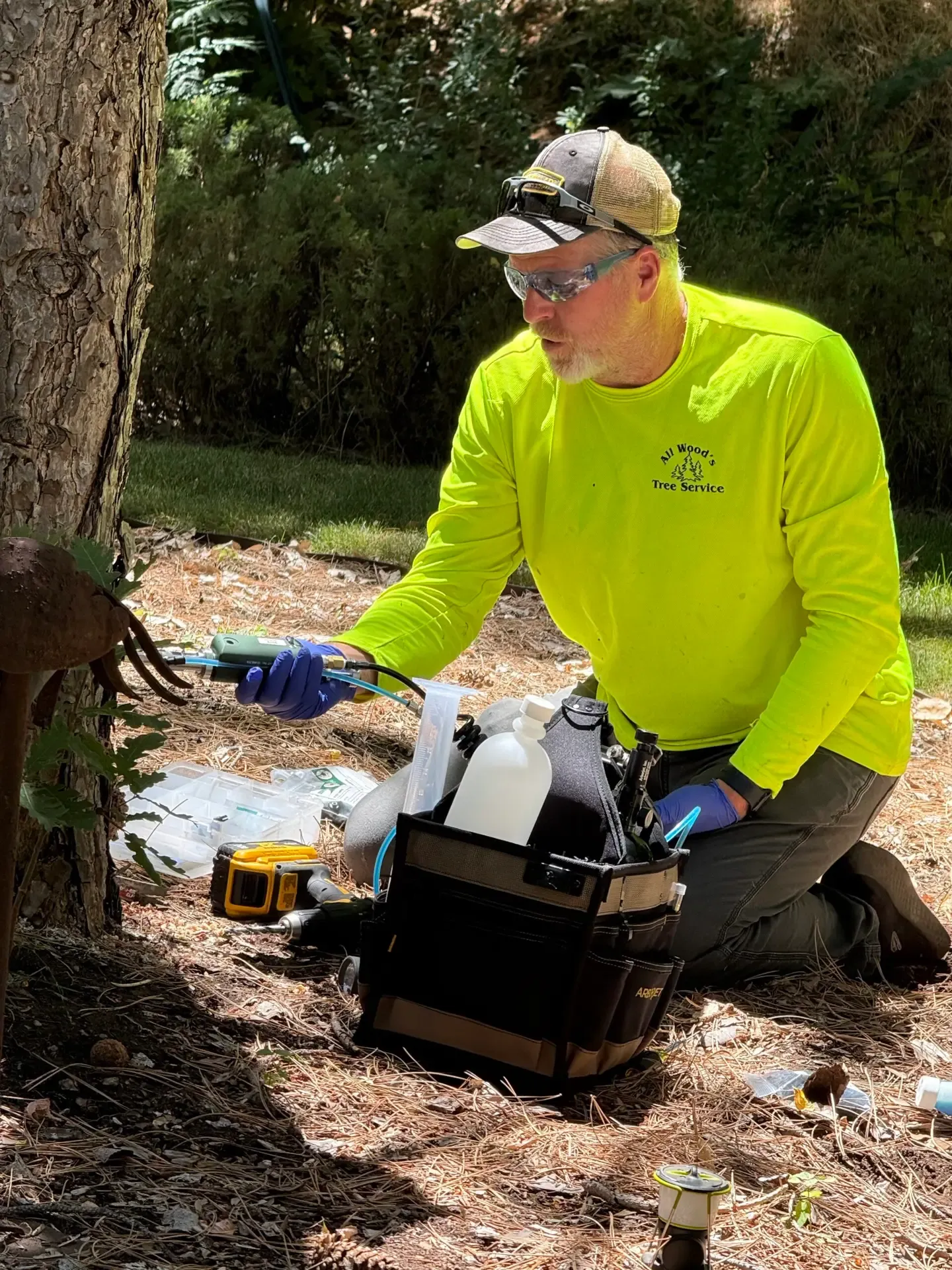
Most homeowners have never seen a trunk injection, and the word "injection" makes it sound more invasive than it is. This short clip shows our ISA Certified Arborist protecting a Layton pine from bark beetles in a few minutes, so you know exactly what to expect when our crew arrives.
- No spraying, no drift.The product goes straight into the tree's vascular system through small, sealed ports at the base of the trunk.
- Minutes per tree.A mature pine is protected for the season in about the time it takes to make a cup of coffee, with nothing left on your lawn.
- Safe around kids and pets.Because the treatment is inside the tree, there's no re-entry wait for your yard.
- Done before the beetles fly.Timing is the whole game. The video is from spring, which is why we book assessments in the fall.
When Each Treatment Happens
Plant health care runs on the tree's calendar, not ours. Booking your assessment this fall gets every treatment on the schedule at the right time.
- September – November
Fall: Feed and Assess
Deep root fertilization goes in while the soil is still warm and roots are actively storing reserves for winter. This is also when our arborists inspect every tree on the property and flag the pines, spruce, birch, ash, and fruit trees that need preventive injections next spring.
- April – June
Spring: Inject Before Beetle Flight
Preventive beetle and borer injections are applied once leaves are out and sap is moving, and before adult beetles emerge and fly. Trees assessed in the fall are first on the schedule, so they're protected before the season's first attack.
Why Choose All Wood’s Tree Service?
- 30+ years of tree care expertise in Utah.We know which pests hit which trees in Davis and Weber County, and when.
- ISA Certified Arborists with specialized training.Every treatment is prescribed and applied by a certified arborist, not a lawn tech.
- Soil-based fertilization plans customized to your landscape.Dosing is set by species, size, and soil test, never one bag fits all.
- Transparent pricing and exceptional customer service.A written plan and price before any work, and a crew that shows up when we say.
- Locally owned and trusted by Utah homeowners.Best of Davis County four years running, with a 4.9-star rating from over 400 reviews.
- Comprehensive care in one visit.Deep root fertilization, disease and pest injections, borer prevention, and iron treatments from one crew.
Plant Health Care Questions
What Davis and Weber County homeowners ask us most about fertilization and injections.
My pine already has brown needles. Can an injection save it?
Usually not, and we'll tell you honestly. Browning at the top of a pine or spruce almost always means bark beetles got in a year or more ago. At that point the tissue that would carry an injection is already destroyed. What we can do is protect the healthy trees around it, which are the beetles' next target, and remove the dead tree before it becomes a hazard.
How often do beetle and borer injections need to be repeated?
It depends on the product and the pest. Some trunk injections protect for a single season, others for two years. Our arborist will set the schedule for each tree during your assessment and remind you when it's due.
Is deep root fertilization safe for my lawn, pets, and kids?
Yes. The solution goes 6 to 12 inches into the soil around the tree, not on the surface, and we use EPA-registered products at labeled rates. Trunk injections are sealed inside the tree, so there's no spray drift and nothing on the lawn.
Which trees on my property should be on a preventive injection program?
In Davis and Weber County, the priority list is mature pines and spruce, birch, ash, and fruit trees, especially any tree you'd be upset to lose. A free assessment will tell you exactly which of your trees are at risk and what each one needs.
Can I fertilize in the fall and inject in the spring in the same program?
That's exactly how the program is designed. Fall feeding builds the tree's reserves and resistance. Spring injection protects it before beetles fly. Booking in the fall puts your trees on the schedule for both.
Get an Estimate
Give your trees the care they need this fall with deep root fertilization, disease and pest injections, borer prevention, and iron treatments. Fall 2026 appointment slots are filling fast across Davis and Weber County.
801-476-9181service@allwoodstreeservice.net
Trusted. Local. Professional.